Alarm Sound Detection Principles: Understanding Smoke, CO and Car Alarms
Alarms: One of the Most Worthwhile Sounds to Understand
A camera can see smoke, but it cannot hear a smoke alarm ringing while nobody is home. Alarm sound detection turns a passive recorder into an active guardian — but "an alarm" is not one sound. Smoke alarms, CO alarms and car alarms each carry a distinctive acoustic pattern, and recognizing which alarm matters far more than detecting "some alarm".
The Signatures of Three Alarm Types
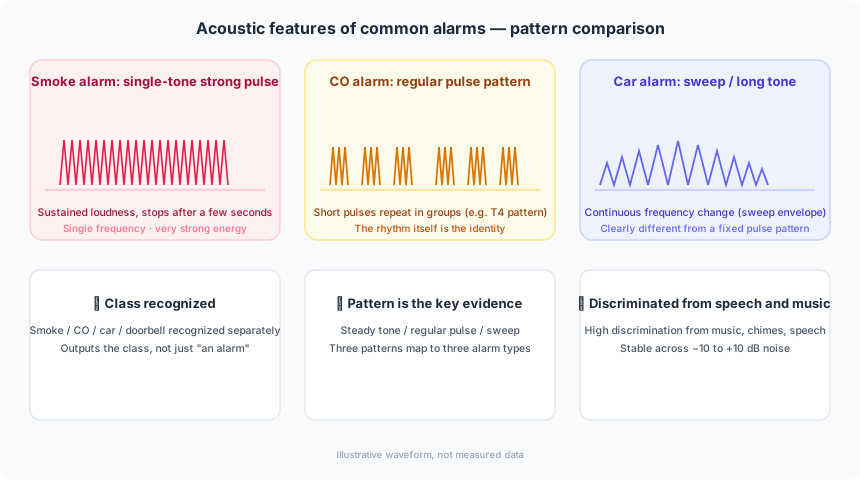
Smoke alarm — — a strong single-frequency pulse lasting several seconds; internationally standardized cadences (T3/T4) are common
CO alarm — — a regular pulse pattern (e.g., four pulses then a pause, the T4 pattern); the rhythm itself is the identity
Car alarm — — a sweeping "wail" or long tone whose frequency glides continuously — clearly different from fixed pulse patterns
These patterns are the key evidence: detection first verifies "this is an alarm-like pattern", then classifies which alarm it is.
From Detection to Graded Notification
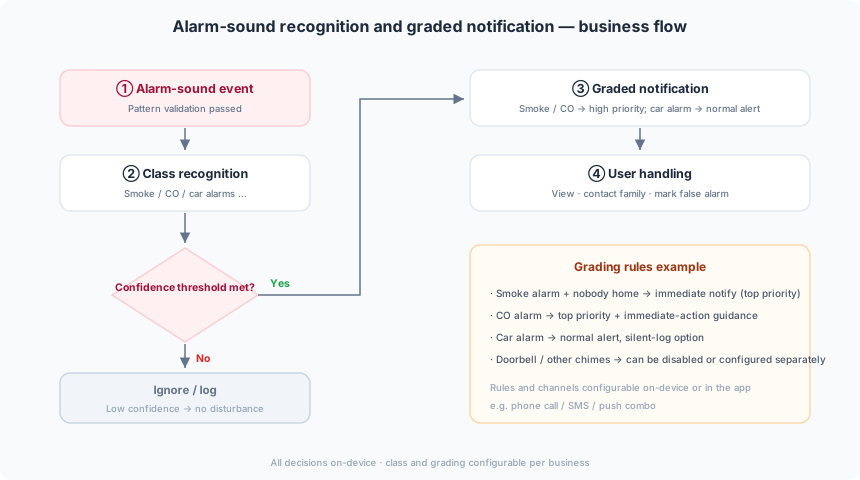
The business workflow runs entirely on-device:
1. Alarm event — pattern verification passed
2. Classification — smoke / CO / car alarm / others
3. Graded notification — smoke or CO with nobody home means highest priority; car alarms are routine reminders
4. User handling — review, contact family, or mark as false alarm
Notification channels and grading rules (push / call / SMS combinations) are configurable per product and per household.
Scenes in the Home
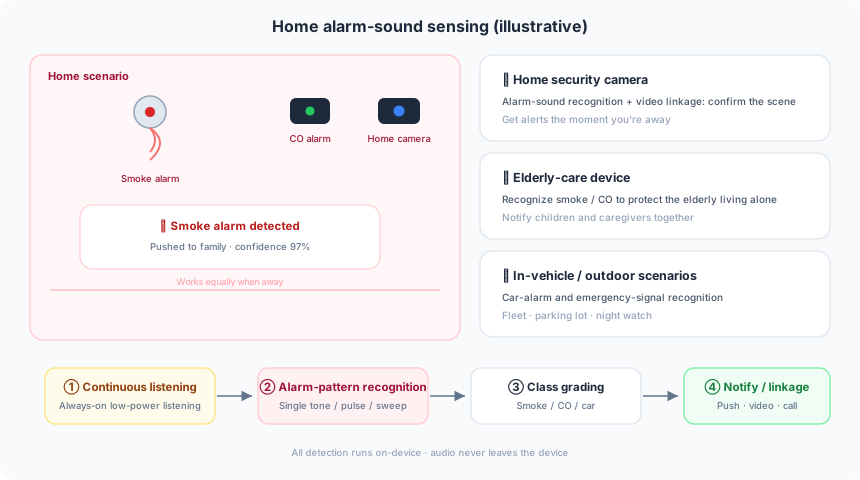
Home security cameras — — alarm detection plus video confirmation
Elderly care devices — — smoke and CO protection, with notifications to children and caregivers
Vehicle and outdoor scenes — — car alarms and emergency signals for fleets and parking areas
Class Composition and Detection Performance
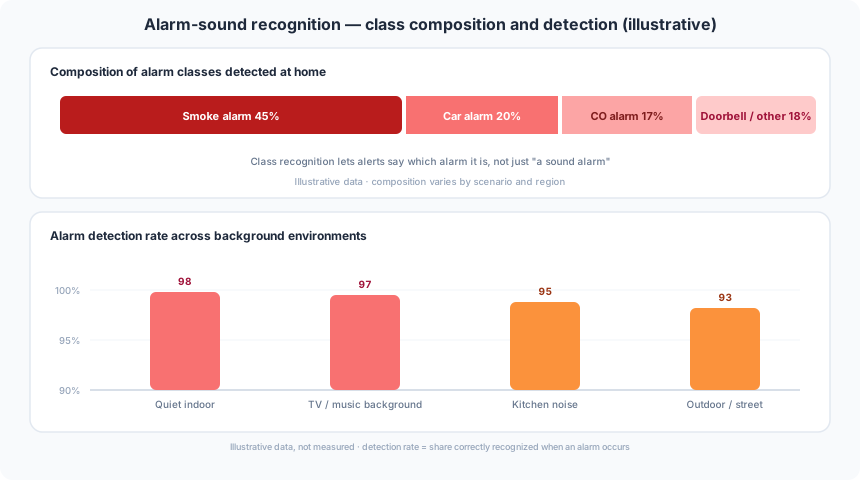
In home scenes, smoke alarms dominate; detection stays above 93% even against kitchen noise and street backgrounds. The main confusion sources — music, ringtones and speech — are handled through multi-class negative training.
Conclusion
Understanding alarms means understanding which alarm — and what it should trigger. If you are building a security, home-safety or care product, an online trial with full technical support is available.
Want to try the detection yourself?