Acoustic Safety for Campuses and Commercial Districts
Sprawling Spaces, Sparse Eyes
Campuses and commercial districts share a structural gap: vast open areas cannot be permanently watched by human eyes. Acoustic event sensing adds a continuous awareness layer — sound travels far in open space, which is exactly where cameras thin out.
Coverage That Fits the Campus
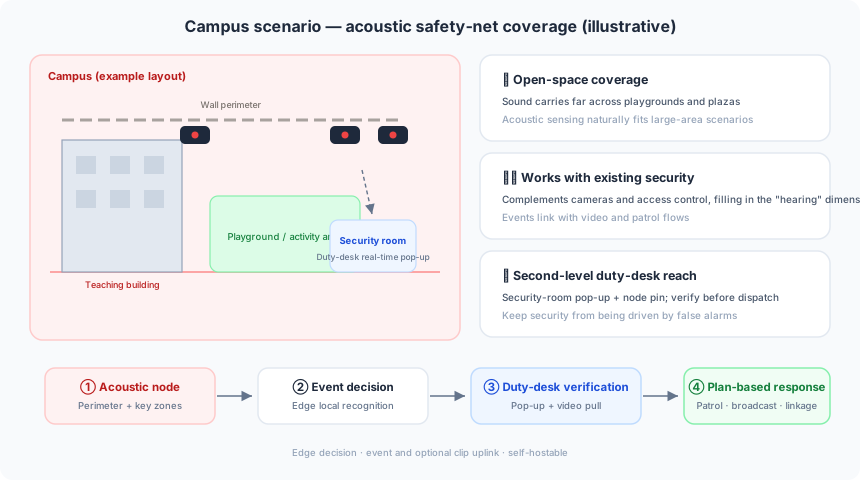
Sensing nodes along the perimeter and key zones; the guard desk receives pop-ups with location pins. The system complements — not replaces — existing cameras and access control by adding the hearing dimension.
The Guard Response Flow
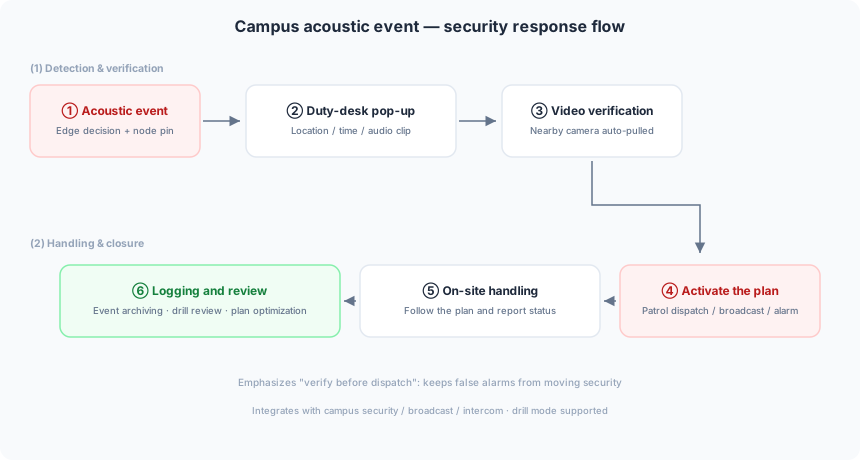
1. Acoustic event — edge decision with location pin
2. Guard desk pop-up — time, location, clip reference
3. Visual verification — nearest camera auto-retrieved
4. Plan activation — patrol dispatch, broadcast, alarm linkage
5. On-site handling — status reported back
6. Record and review — archive for复盘 and drill improvement
The "verify before dispatch" principle keeps guard resources from chasing false alarms.
Scenario-Based Deployment Points
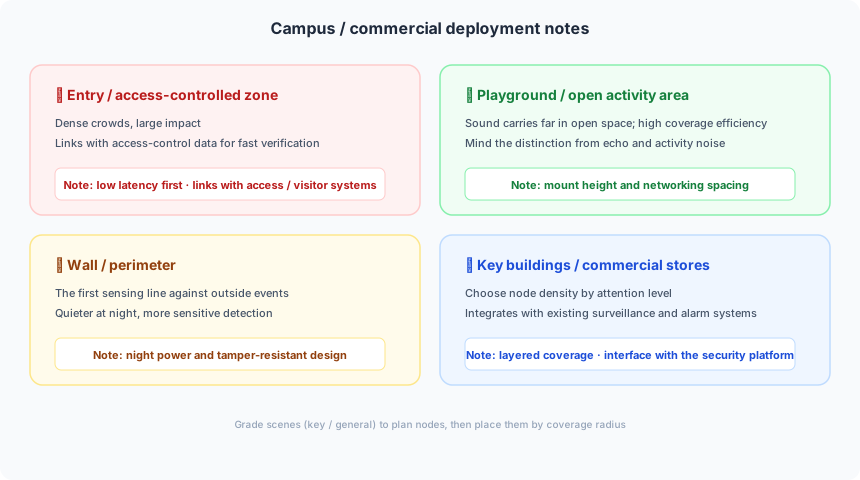
Gates — — low latency first; link with access-control
Playgrounds — — installation height and networking spacing matter
Perimeter — — quiet at night; power and tamper-proofing design
Key buildings and stores — — layered coverage by risk level
Discovery Time: The Order-of-Magnitude Gap
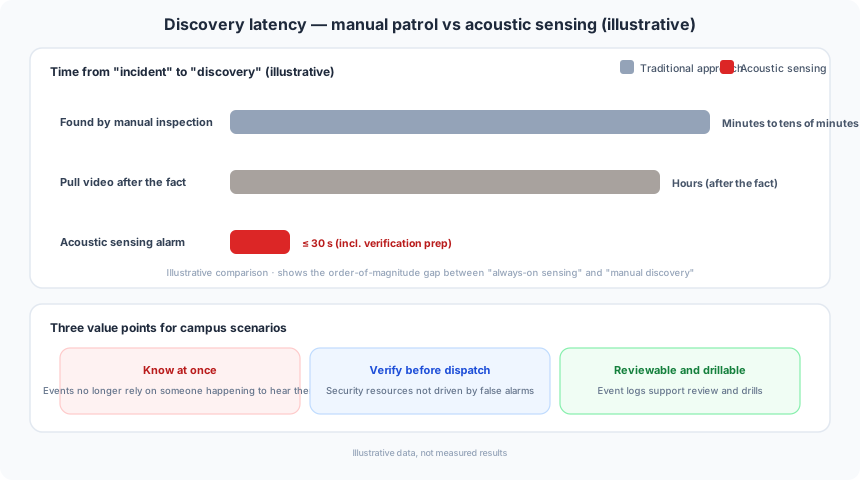
Manual discovery takes minutes to tens of minutes; acoustic sensing delivers events within seconds — plus the three value points: first awareness without luck, verification before dispatch, and traceable records for drills.
Conclusion
For campuses and commercial districts, acoustic event sensing is a pragmatic layer: low intrusion, fast to pilot, and designed to work with your existing security stack. An online trial with deployment support is available.
Want to try the detection yourself?