Cat Sound Detection Principles: Understanding Feline Vocal Signals
What Is Your Cat Saying?
Cats are among the few pets that "talk" to their humans: short meows when hungry, long yowls during stress or heat cycles, early-morning wake-up calls. For pet care devices, cat sound detection upgrades a product from "seeing your pet" to "understanding your pet."
The Most Underrated Challenge: Meows Sound Like Baby Cries
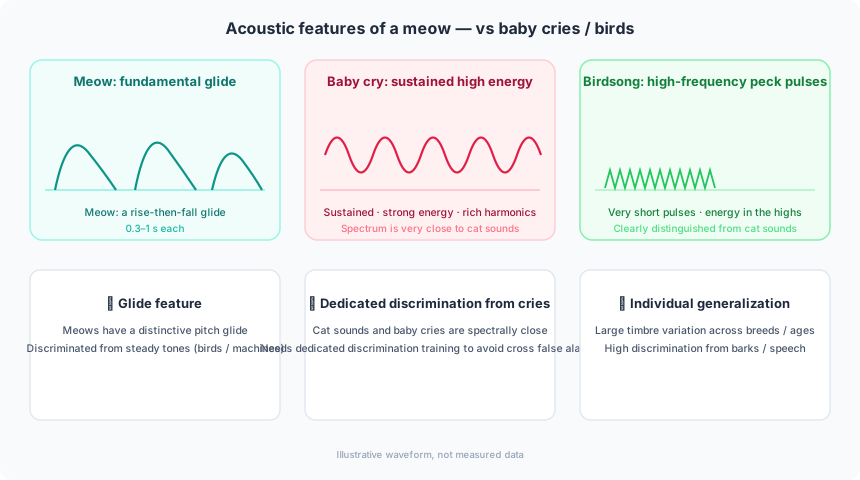
Cat meows sit remarkably close to baby cries in the spectrum — mid-frequency energy, clear pitch glides, rich harmonics. Generic audio models routinely confuse the two: baby monitors report meows as crying, and pet cameras mistake cries for meows. Cat detection therefore needs a key capability: dedicated discrimination against cries — which also makes the "cat + cry" combined offering a popular choice for products serving both pets and infants.
The Acoustic Signature of Cat Sounds
Meows — a distinctive "rise-then-fall" pitch glide, 0.3–1s per call
Yowls — longer and louder, arriving in段落 during stress or heat
Clearly distinct from birdsong (high-frequency chirps) and dog barks (lower mid-frequency bursts in series)
Detection Principles: Three Keys
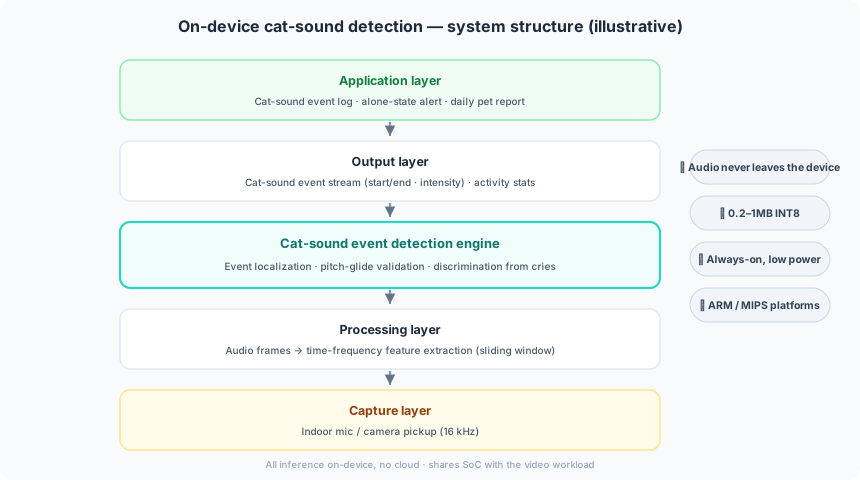
Key 1: Events as units. The system outputs onset/offset and intensity for each vocal segment — not a per-frame judgement.
Key 2: Pitch-glide verification. The rising-falling pitch contour of a meow is unique evidence that separates it from steady sounds.
Key 3: Dedicated discrimination against cries and speech — trained with targeted negative samples in both directions to cut cross false alarms.
The Alone-Time Care Workflow
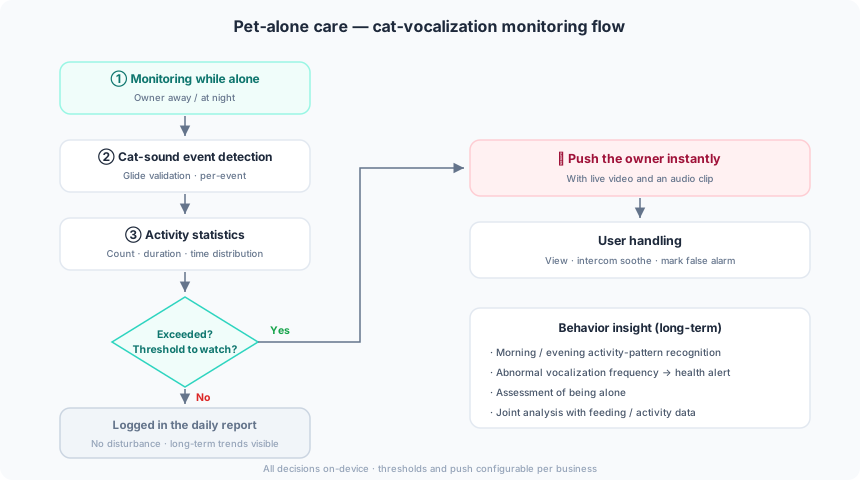
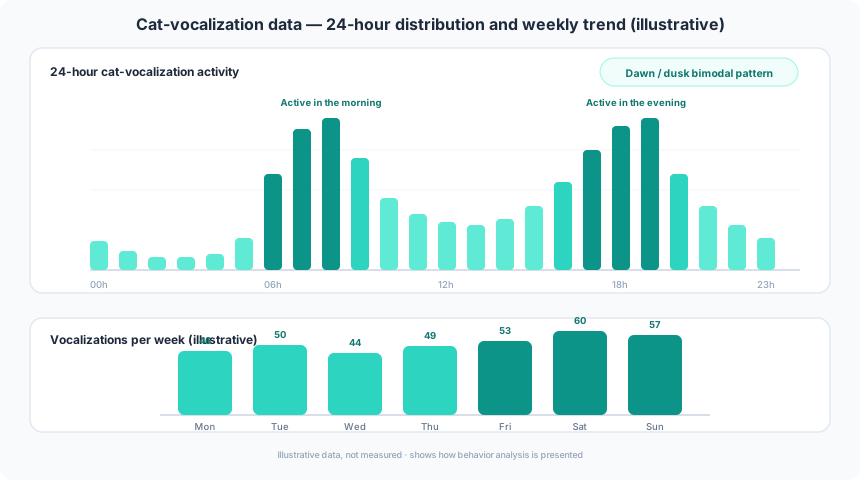
While the owner is away or at night, the device keeps listening: event detection → activity statistics (count / duration / time-of-day) → push an alert with live video when the concern threshold is exceeded, otherwise log it into the behavior report. Over time, the data reveals the classic dawn/dusk activity rhythm and feeds health and behavior analysis.
Typical Applications
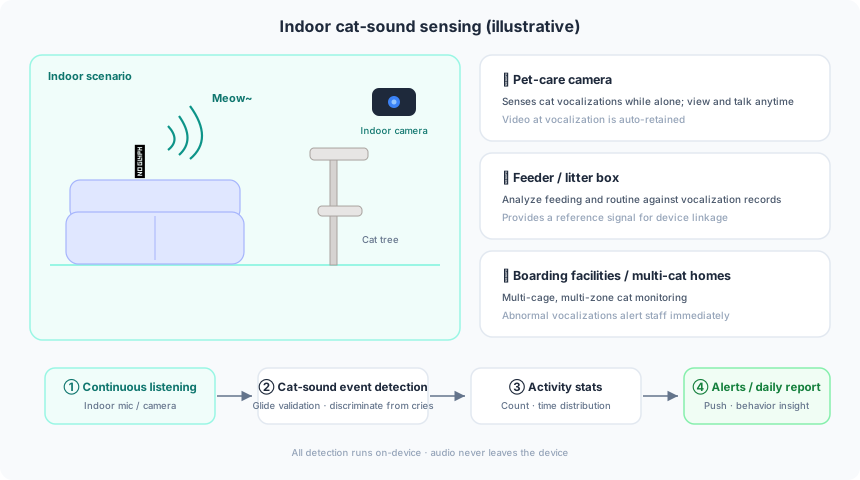
Pet monitoring cameras — — meow sensing and two-way talk while away
Smart feeders / litter boxes — — joint analysis with feeding and daily rhythm
Boarding facilities / multi-cat homes — — multi-area monitoring and outlier alerts
Pet-and-baby households — — combined with cry detection to avoid mutual false alarms
Activity Data (Illustrative)
Platform Compatibility and Performance
Conclusion
The value of cat sound detection is letting devices understand what the cat is expressing right now — and delivering timely insight in alone-time, health and boarding scenarios. If you are evaluating cat sound detection for a pet product or a pet-and-baby scenario, an online trial with full technical support is available.
Want to try the detection yourself?