Dog Bark Detection Principles: Stable Recognition Across Breeds and Environments
Why Dog Bark Detection
In the soundscape of a doorway or yard, barking carries the most information: alert-barking at a stranger, casual barking at a passing car, and sustained barking when a pet is alone mean very different things. For smart doorbells, outdoor cameras and pet-monitoring devices, detecting barking is only step one — telling "which kind of barking" apart is where product value lives.
The Acoustic Signature of Dog Barks
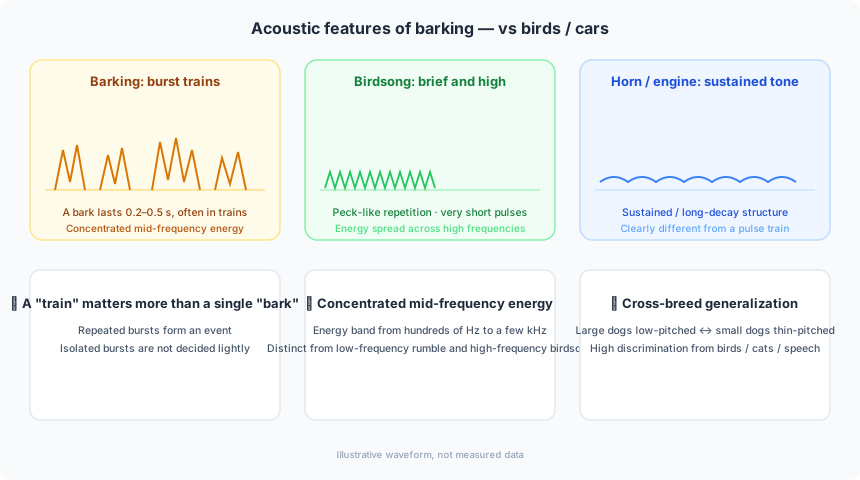
Compared with birds and cars — the other common sounds at the door — barking has three distinctive traits:
Bursts in groups — — a single bark lasts about 0.2–0.5s, and barks usually arrive in short series rather than as isolated events
Mid-frequency energy — — the energy band sits between a few hundred Hz and a few kHz: above the rumble of traffic, below birdsong
Wide variation across breeds — — deep and resonant for large dogs, sharp and rapid for small ones; detection must handle "same event, different timbre"
Detection Principles: Three Keys
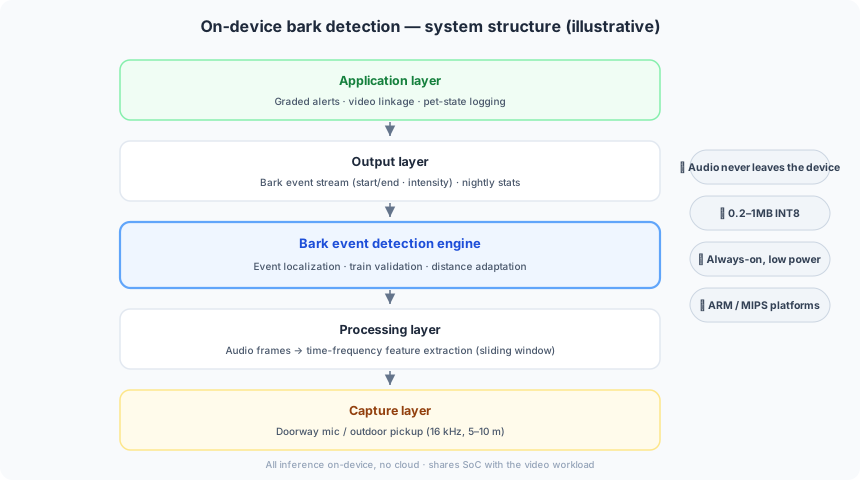
Key 1: Work in "series", not "single barks". The system first locates each burst, then verifies the series structure — several bursts with barking-like intervals constitute a bark event. Isolated transients (a door slam, a falling object) are not lightly accepted.
Key 2: Generalization across breeds and near-neighbor classes. Training covers the timbres of different dog sizes while enforcing high discrimination against bird calls, cat sounds, speech and traffic.
Key 3: Robustness in outdoor conditions. Wind, rain and distance (5–10m) are everyday realities outdoors; event-based detection is inherently insensitive to sustained ambient noise.
Graded Alerts: Turning "A Dog Barked" into Useful Information
The real value of bark detection is grading. A typical business workflow:
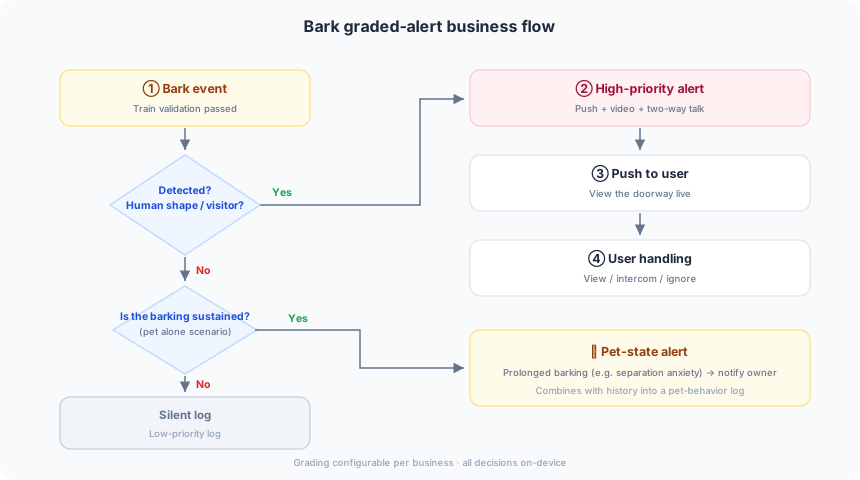
1. Bark event — series verification passed
2. Scene evaluation — is a person present? is the barking sustained?
3. Graded outputs —
- visitor present + alert barking → high-priority alert (push + recording + two-way talk)
- isolated barking with no visitor → silent log (low priority)
- sustained barking while away → pet status reminder (separation anxiety, etc.)
All decisions run on the device, and the grading policy is configurable per customer workflow.
Typical Applications
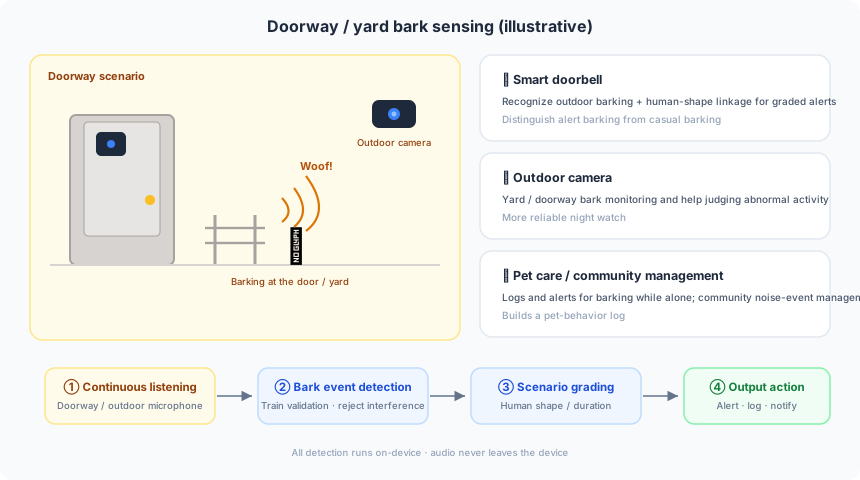
Smart doorbells — — barking + human-presence linkage; alert vs casual barking
Outdoor cameras — — yard bark monitoring; night-time anomaly assistance
Pet care — — alone-time barking logs and reminders
Community management — — public-area barking events and noise management
Performance Validation
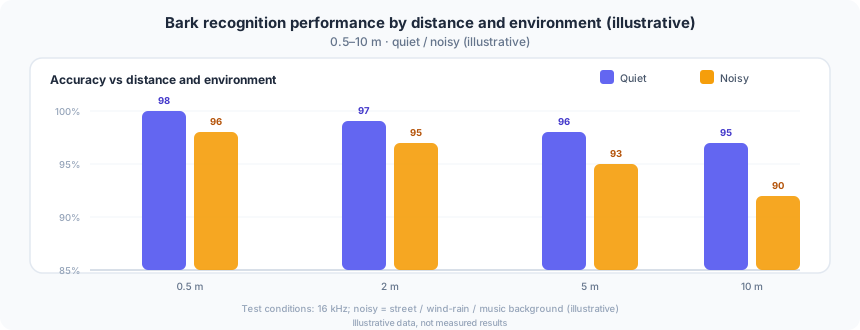
From 0.5 m to 10 m — typical door distances — recognition stays stable in both quiet and noisy conditions. False alarms stay below 2%.
Conclusion
The product value of bark detection is not "detecting a bark" — it is understanding what this bark means. With series verification at the core and scene-based grading at the output, sound becomes usable information in security and pet devices. If you are evaluating bark detection for a doorbell, camera or pet product, an online trial with full technical support is available.
Want to try the detection yourself?