Child Presence Detection in Vehicles: Meeting EU GDPR Requirements with Sound Recognition
Starting July 2026, the EU General Safety Regulation (GSR) mandates that all new passenger vehicles must include Child Presence Detection (CPD) systems.
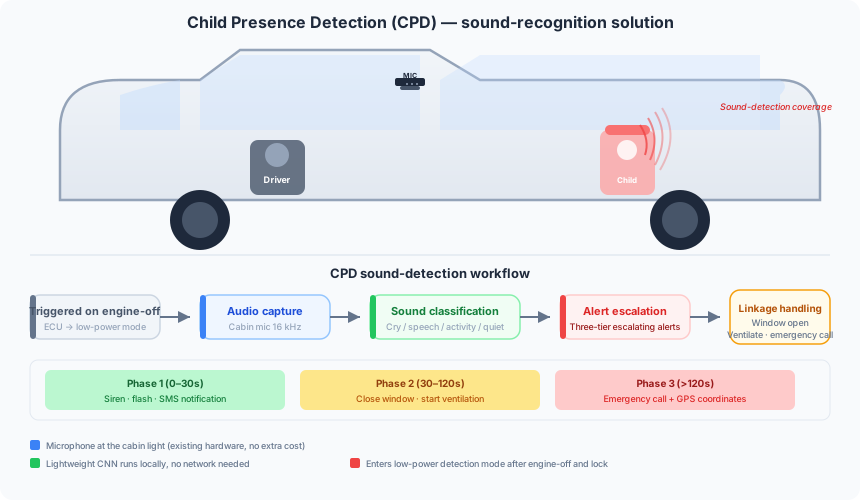
The Regulation: What You Need to Know
EU GSR 2026 requires CPD systems to:
1. Detect a child left in the vehicle after the engine is turned off and doors are locked
2. Trigger a multi-stage alert: first to the driver, then to emergency services if no response
3. Operate in extreme temperatures: the vehicle interior can reach 70°C in summer sun
4. Work with all child seating positions: rear-facing, forward-facing, booster seats
5. Avoid false alerts: excessive false positives will lead to driver annoyance and system disablement
Why Sound Detection Is the Best Fit for CPD
Sound recognition using a lightweight CNN model running on the vehicle's existing microphone offers the best combination of zero added hardware cost, privacy preservation, full cabin coverage, and low power consumption.
The Detection Pipeline
Engine-off trigger → Continuous audio monitoring → Sound classification (cry, child voice, movement) → Alert escalation (horn/flashers → window roll-down → emergency call).
Conclusion
EU GSR 2026 makes CPD mandatory for new vehicles. Sound-based detection using existing cabin microphones is the most practical path to compliance. Our SDK provides pre-compiled libraries for automotive-qualified MCU platforms.
Want to try the detection yourself?