Glass Break Detection Principles: Millisecond Transient Recognition with Low False Alarms
When a window shatters, the sound lasts less than a second — but for a security system, that second decides how fast it can respond, and whether users trust it.
Why Glass Break Detection Is Both Easy and Hard
Acoustically, breaking glass is a distinctive transient event: sudden onset, concentrated energy, abrupt ending. That sounds easy to detect — but real-world security deployments tell a different story. A dropped keyring, clattering dishes, a metal tool hitting the floor — all share the same "sudden, short, crisp" character. In retail and warehouse settings, a single false alarm is enough to erode user trust.
The real challenge is not "can it hear breaking glass" — it is "how to react only to genuine break events among thousands of similar sounds."
The Acoustic Signature of Breaking Glass
A complete glass break event has two consecutive stages:
① Impact stage. The instant an object hits the glass, a short, concentrated impact sound is produced — typically only a few milliseconds long.
② Shatter stage. As the glass cracks and springs apart, it generates dense, broadband, rapidly decaying high-frequency vibrations — the most distinctive signature of breaking glass.
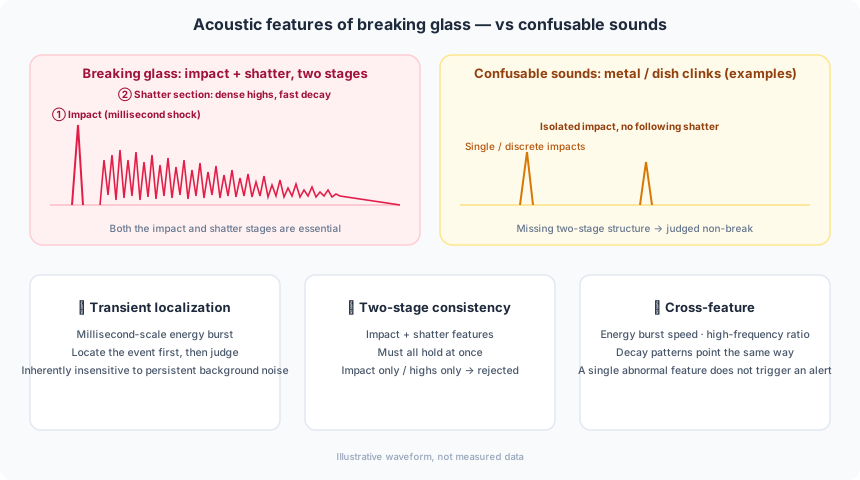
Compared with common confusing sounds, breaking glass differs in two fundamental ways:
• A single collision (keys, dishes) usually produces an isolated impact with no dense shatter stage
• Sustained sounds (music, speech) have no transient impact structure — their energy spreads over time
Three Design Principles for Low False Alarms
Principle 1: Find the event first, then judge. Instead of classifying every frame, the system first detects transient events (energy bursts) and analyzes around them. This makes it inherently insensitive to sustained background noise such as air conditioning, street traffic or rain.
Principle 2: Two-stage consistency. A genuine break must show the complete "impact + shatter" structure. Sounds with only an impact, or only high-frequency content without a shock, are rejected.
Principle 3: Cross-feature verification. Energy onset speed, high-frequency ratio and decay pattern must all point consistently to a break event — no single feature can trigger an alert on its own.
From Detection to Linkage: The On-Device Pipeline
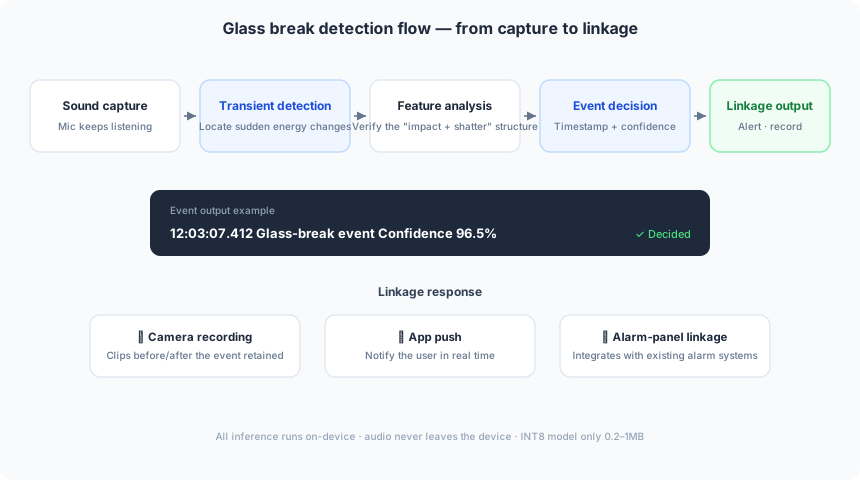
A real glass break alert travels this chain entirely on the device:
1. Continuous capture — the microphone listens at ultra-low power
2. Transient detection — energy bursts are spotted and marked as candidates
3. Feature analysis — candidate events are verified against the two-stage structure
4. Event decision — a unified detection result with confidence is produced
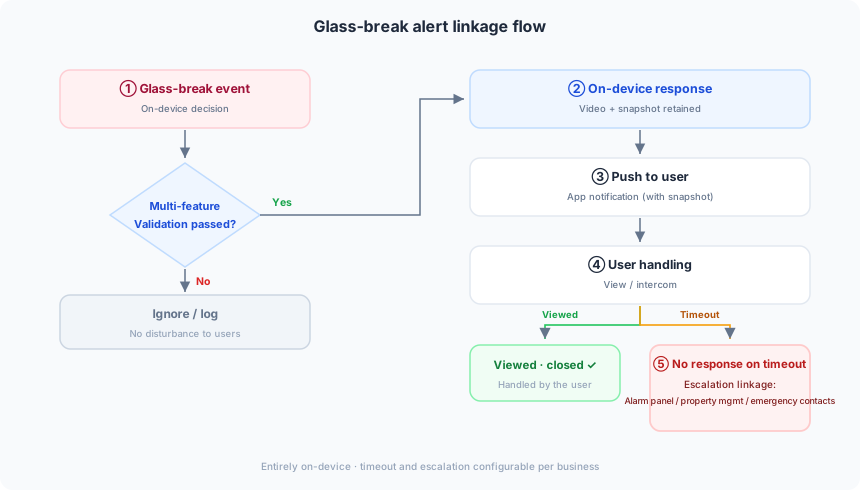
5. Linkage — recording, push notification and alarm panel actions are triggered
Everything runs locally: no audio upload, no network dependency.
Platform Compatibility and Performance
INT8-quantized, the glass break model is only 0.2–1 MB and runs directly on mainstream security SoCs:
Latency and model tier can be traded against platform resources — stronger platforms can run a larger model tier. See the developer docs for integration details.
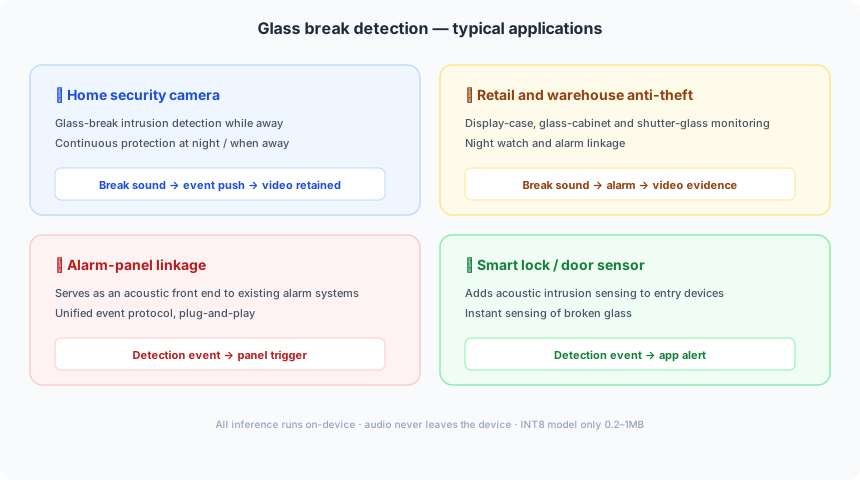
Typical Applications
Home security cameras — — window break-in detection while away
Retail and warehouses — — monitoring display windows and glass cabinets
Alarm panels — — an acoustic front-end for existing alarm systems
Smart locks and door sensors — — adding acoustic intrusion sensing to entry devices
Conclusion
The hard part of glass break detection is not recognizing breaking glass — it is not reacting to everything else. Event-centric detection, two-stage consistency and cross-feature verification are the keys to commercial-grade low false alarms. If you are evaluating glass break detection for a security product, we offer an online trial with full technical support.
Want to try the detection yourself?