Glass Break Detection in Security Systems: Deployment and False-Alarm Governance
Shipping Is the Easy Part
Installing glass break detection takes days. Keeping false alarms low over years of operation is the real craft. This article covers the two halves that determine whether the feature delights users or gets switched off: deployment quality and false-alarm governance.
Deployment: Positions and Calibration
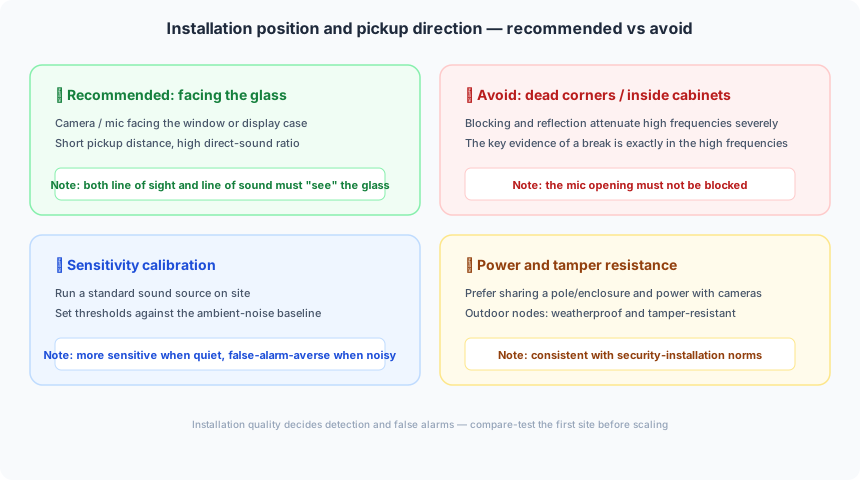
Face the glass — — short pickup distance, direct sound dominates
Avoid dead corners and cabinets — — the decisive evidence (high-frequency shatter) attenuates fastest behind obstacles
Calibrate on site — — run a standard sound source, set thresholds against the ambient noise baseline
Power and tamper — — co-mount with cameras where possible; waterproofing outdoors
The first installation deserves a对比 test before batch construction.
System Integration Topology
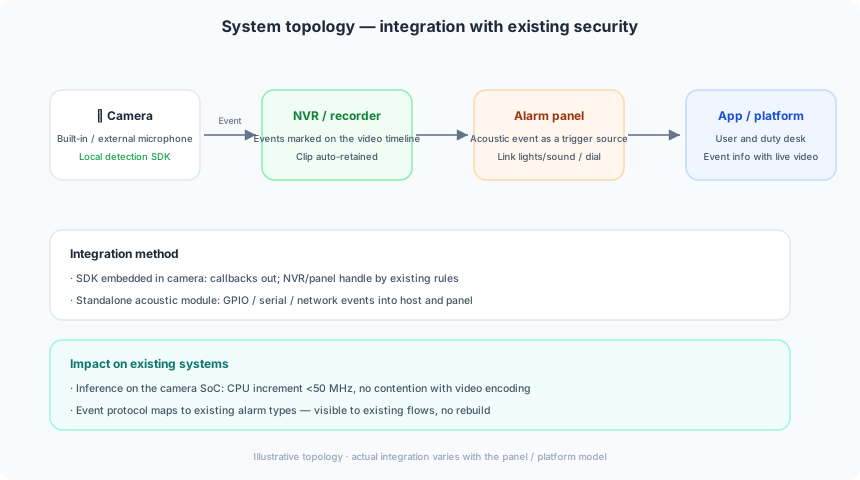
The detection SDK runs inside the camera SoC: events feed the NVR timeline, the alarm panel as a trigger source, and users via the app. Burden on the existing system: CPU increment under 50MHz; event protocol mappable to existing alarm types — no platform rebuilds required.
The False-Alarm Governance Loop
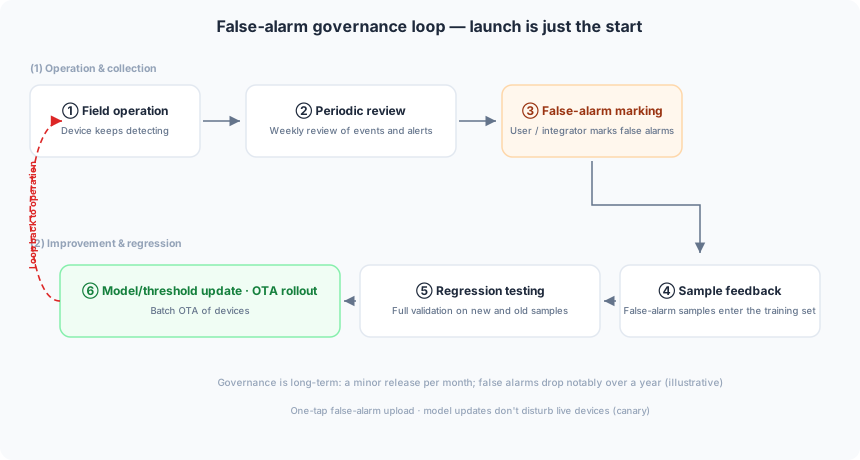
1. Field operation — continuous detection
2. Periodic review — weekly event review by users or integrators
3. False-alarm labeling — one-click marking
4. Sample回流 — samples enter the training set
5. Regression testing — old and new samples fully validated
6. Model/threshold update via OTA — fleet upgraded, canary-capable
Governance is a long game: a minor release per month, and false alarms typically drop significantly over a year (illustrative).
What Governance Delivers
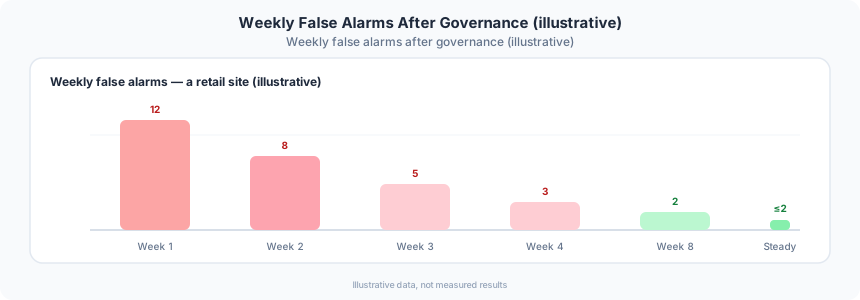
The chart shows a typical curve from ~12 weekly false alarms down to ≤2 after targeted fixes.
Conclusion
Deployment decides the floor; governance decides the ceiling. If you are an integrator or OEM shipping glass break detection, an online trial with governance methodology support is available.
Want to try the detection yourself?