Gunshot Detection Principles: Millisecond Transient Recognition for Public Safety
Why Gunshot Detection
In public safety, every second between an incident and a response matters. Gunshots carry a unique acoustic fingerprint — and unlike cameras, microphones work in darkness, around corners, and across open spaces. Understanding that fingerprint is the first step to building reliable detection.
The Acoustic Fingerprint of a Gunshot
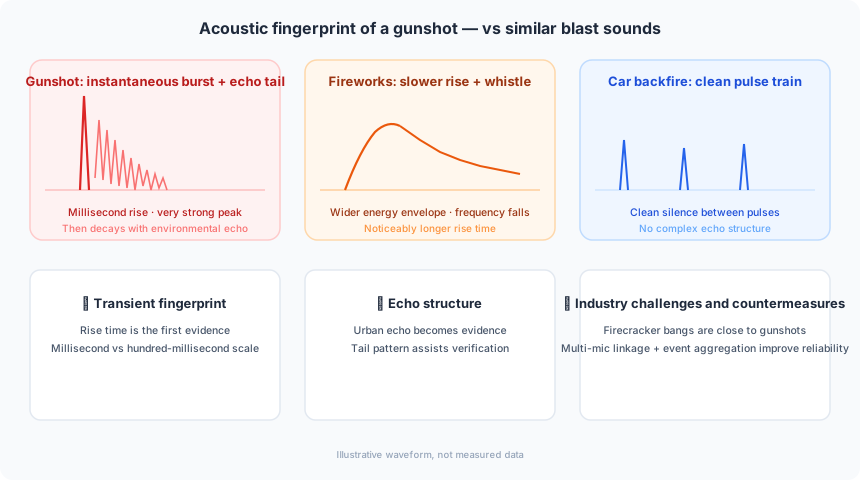
Millisecond-scale onset — — the leading edge of the shock is virtually instant; energetic analysis of the onset is the first piece of evidence
Echo tail — — the blast reflects off buildings and terrain; the decaying echo pattern is a second, environment-based signature
Discrimination from lookalikes — — fireworks rise more slowly with whistle-like tails; car backfires form clean pulse trains without complex echoes
An industry honesty note: firecrackers are acoustically close to gunshots — this is a well-known hard problem. Multi-microphone cooperation and event aggregation across nodes are the practical ways to raise reliability, rather than pretending single-point perfection.
From Detection to Linkage
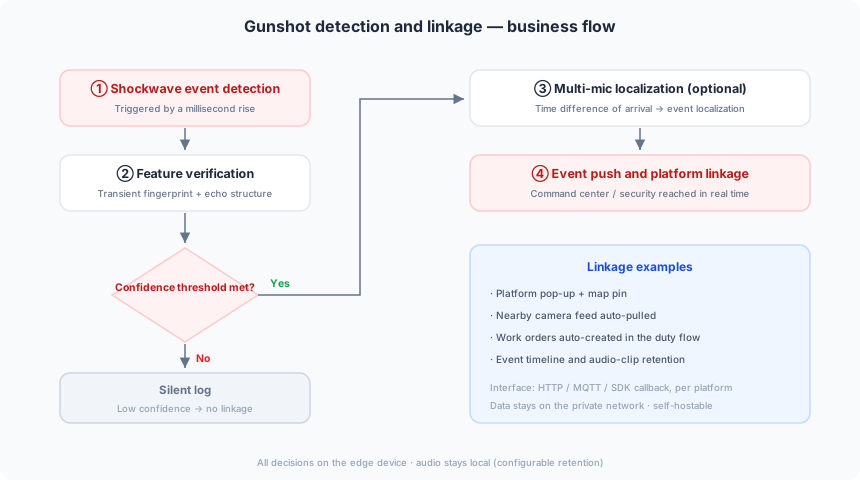
1. Shock event — onset-triggered detection
2. Feature verification — transient fingerprint plus echo structure
3. Multi-microphone localization (optional) — arrival-time differences across nodes estimate the event location
4. Push and platform linkage — command center pop-ups, map pins, camera retrieval, ticket creation
All decisions run on the edge device; audio stays on-device by default.
City Street Scene
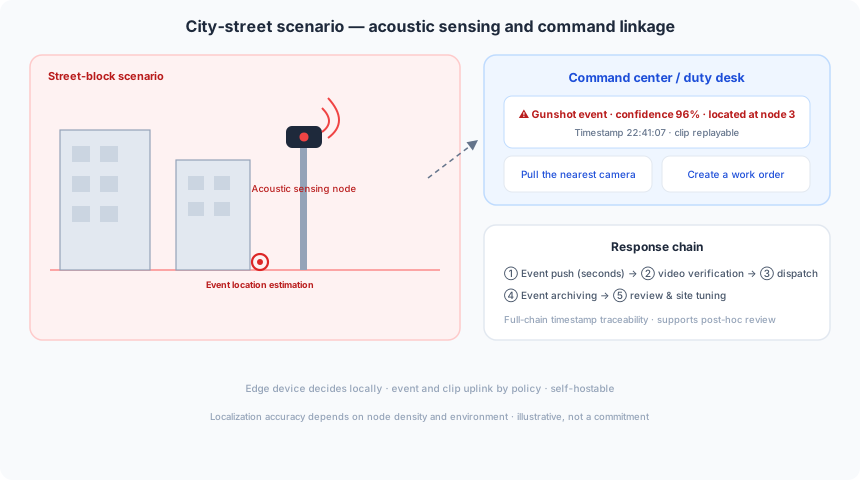
Sensing nodes mount on lamp posts and poles; events carry timestamps and optional audio clips; the command center sees the map pin, retrieves the nearest camera, and dispatches. The whole chain is traceable for after-action review.
Key Metrics
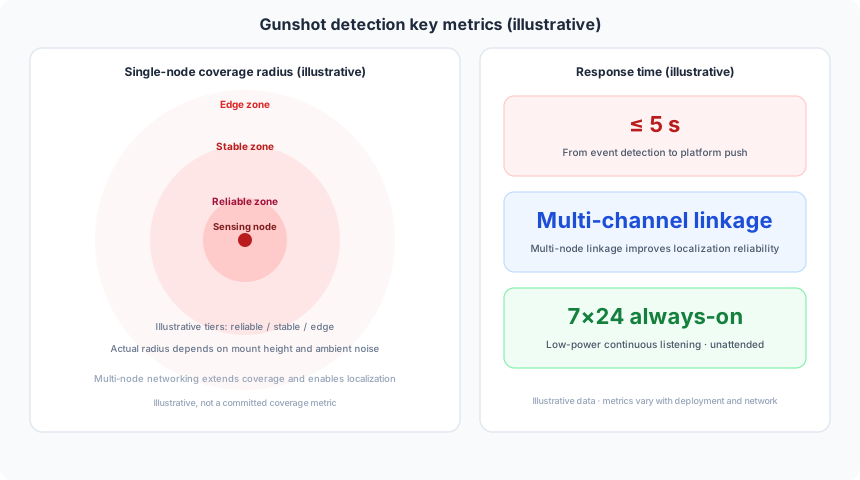
Coverage is planned in tiers (reliable / stable / edge); multi-node networking extends range and adds localization. Event-to-platform delivery is targeted at seconds; everything runs 7×24 at low power.
Conclusion
Gunshot detection is transient recognition at its hardest — and its most valuable. If you are building public-safety, campus or city sensing solutions, an online trial with full technical support is available.
Want to try the detection yourself?