Smart City Acoustic Sensing: Deploying Gunshot Detection at City Scale
From a Single Node to a City Network
Scaling gunshot detection city-wide is a system engineering problem: site survey, device selection, acoustic calibration, networking, platform integration, and long-term operations. This article walks the full deployment path.
The Six-Step Deployment Path
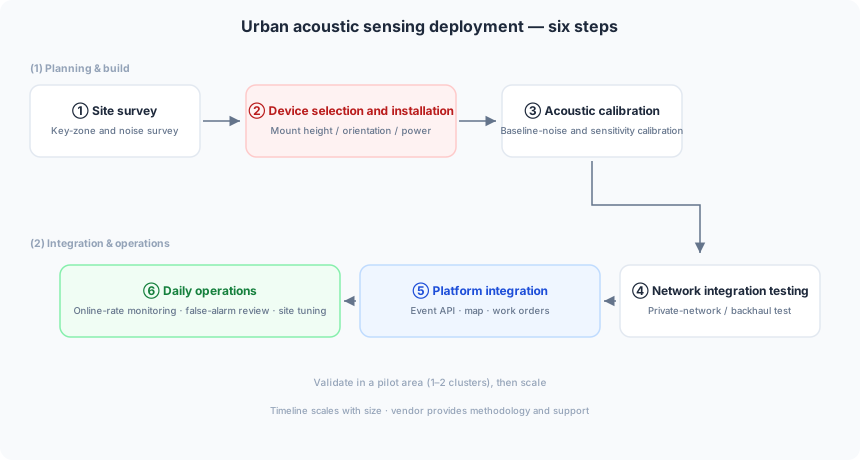
1. Site survey — priority areas and ambient noise profiling
2. Device selection and installation — height, orientation, power
3. Acoustic calibration — baseline noise and sensitivity per site
4. Networking and commissioning — private-network or cellular backhaul
5. Platform integration — event APIs, map, ticketing
6. Operations — uptime monitoring, false-alarm review, site refinement
Start with a pilot cluster (1–2 node groups), validate, then scale.
The Four-Layer Architecture
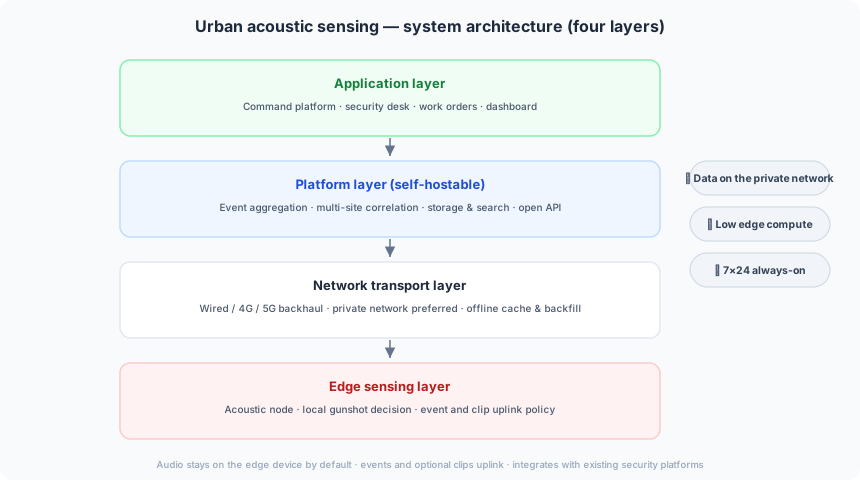
Edge sensing layer — — sensing nodes with on-device gunshot decision and uplink policy
Network layer — — wired / 4G / 5G backhaul, private network preferred, cache-and-forward on outage
Platform layer (private deployment capable) — — event aggregation, multi-site correlation, storage, open interfaces
Application layer — — command platform, guard desks, ticketing, dashboards
Audio stays on the edge by default; events and optional clips are what travel.
Site Layout and Platform Convergence
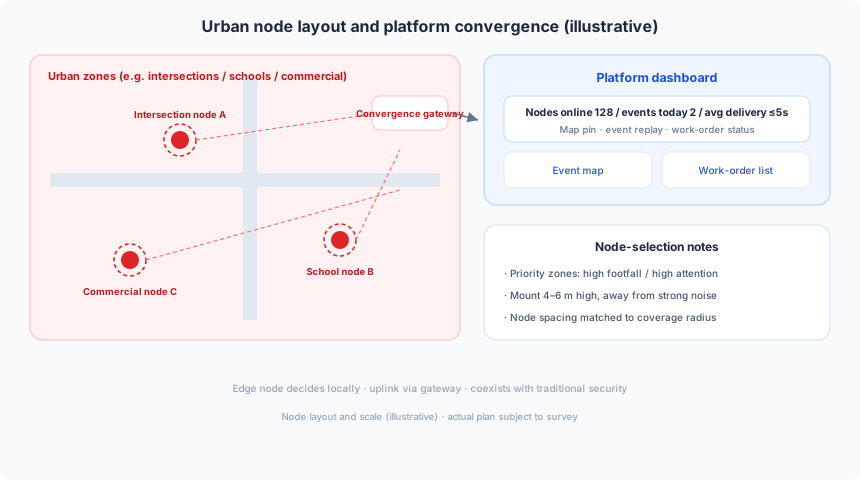
Sites cluster around intersections, schools and commercial districts; a gateway converges node events; the platform dashboard shows online nodes, today's events, and delivery latency. Typical installation: 4–6 m height, away from strong noise sources, spacing planned per coverage tier.
Metrics and Phase Rhythm
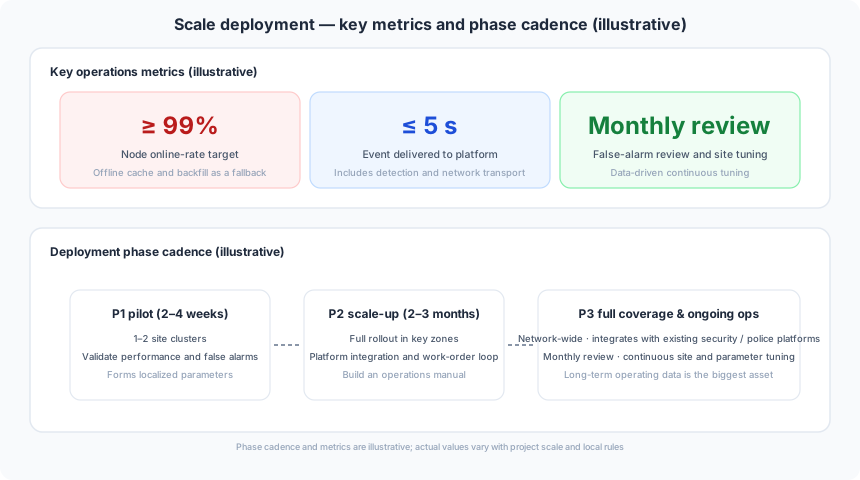
Phase P1 pilot (2–4 weeks) → P2 expansion (2–3 months) → P3 city-wide and long-term operations.
Conclusion
City-scale acoustic sensing succeeds on deployment discipline: calibrate locally, pilot first, and let monthly data reviews keep refining the network. An online trial with deployment methodology support is available.
Want to try the detection yourself?