Knock Detection for Smart Doorbells: Hearing the Visitors You Would Have Missed
The Visitor Behavior We Keep Missing
The courier drops the parcel, knocks twice and leaves. A neighbor knocks on the window in passing. A child is too small to reach the doorbell button... In reality, a large share of arrivals never touches the doorbell. Button-only doorbells miss these visitors — and motion detection cannot tell "someone walked by" from "someone knocked," producing imprecise alerts and notification fatigue.
Knock Detection Closes the Awareness Gap
Adding knock recognition to a doorbell or entry camera lets the device understand visitor behavior:
• wake the video feed the instant a knock occurs — no visit is missed
• upgrade notifications from "motion detected" to "someone is knocking"
• combine with visit logs to form a complete door event history

The End-to-End Workflow
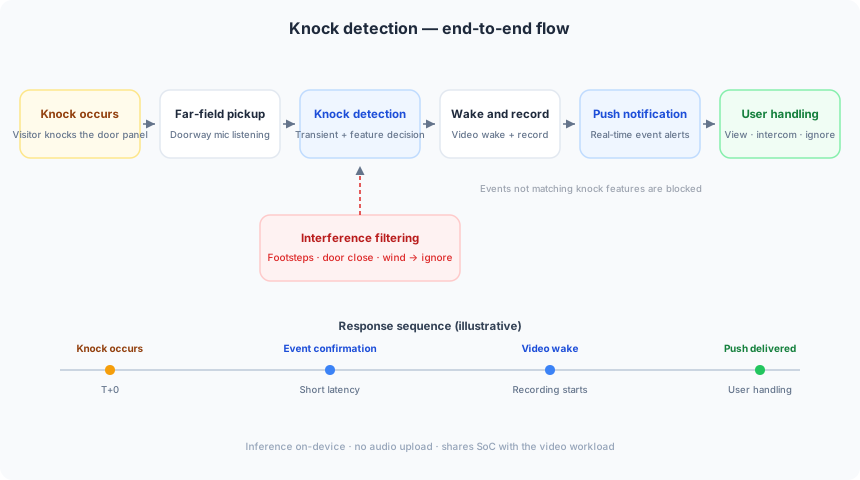
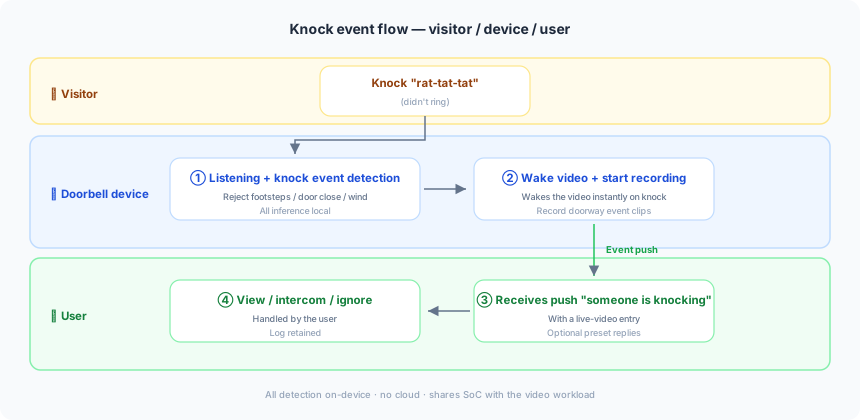
Here is the complete on-device chain for a single knock event:
1. Knock occurs — a visitor raps on the door or window
2. Continuous listening — the doorbell microphone monitors the entrance at low power
3. Event detection — knock-like acoustic features are recognized while footsteps, door slams and wind are rejected
4. Wake and record — the video doorbell wakes up and starts recording
5. Push notification — the user receives a "someone is knocking" alert with live video
6. User response — view live, talk back, use a preset reply, or dismiss
Why Knocks Are Harder to Distinguish Than They Sound
The entrance environment is acoustically busy. Knock-like sounds must be separated from:
Footsteps — — periodic, low-frequency, no sharp transient structure
Door slams — — concentrated low-frequency energy with a different decay pattern
Wind and rain — — sustained noise without event structure
Music beats — — rhythmically periodic, ruled out by periodicity analysis
At the principle level, knock detection is again transient-event analysis: locate the short energy burst first, then separate knocks from other transients by their time-frequency signatures. All processing happens on the device — audio never leaves it.
Platform Compatibility and Performance
Far-field knock detection is supported, sharing the SoC with the camera workload without affecting video encoding or streaming.
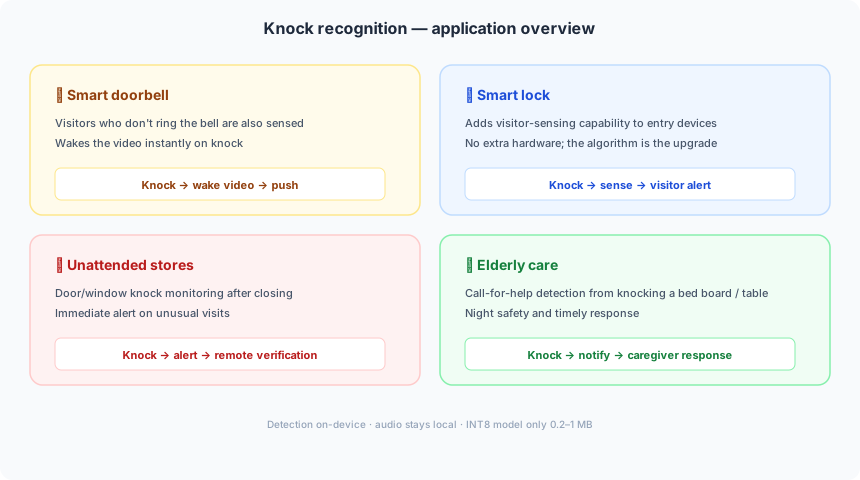
Broader Applications
Smart locks — — add visitor awareness to entry devices
Home security cameras — — tapping detection near doors and windows
Unattended stores — — after-hours knock monitoring
Elderly care — — detecting knocking on bed frames or tables as a call for help
Conclusion
Visitors do not always ring the bell — but they always make a sound. Knock detection upgrades a doorbell's awareness from "seeing" to "hearing," so no visit is missed. An online trial with full technical support is available — we welcome your evaluation.
Want to try the detection yourself?