Upgrading Smart Pet Devices with Cat Sound Detection: A Selection & Integration Guide
Sound Perception Is Becoming Standard in Pet Devices
Pet hardware is moving from "seeing" to "hearing": cameras, feeders, litter boxes and boarding monitors almost all ship with a microphone out of the box. Sound understanding lets that same hardware unlock entirely new product value — without changing the BOM.
Which Devices Fit Cat Sound Detection
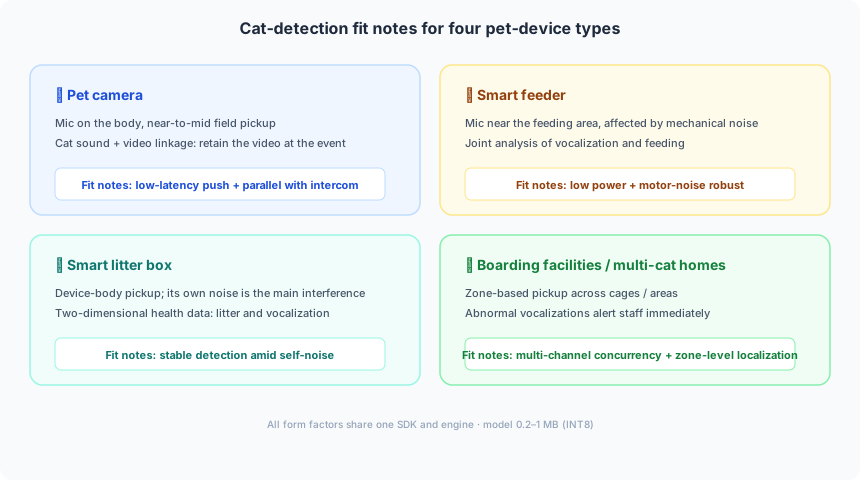
The four common forms have different adaptation priorities — low-latency push for cameras, low power plus motor-noise robustness for feeders, self-noise stability for litter boxes, and multi-channel concurrency for boarding facilities — yet they all share the same SDK and detection engine. Integrate once, reuse across a product line.
A Four-Dimension Selection Framework
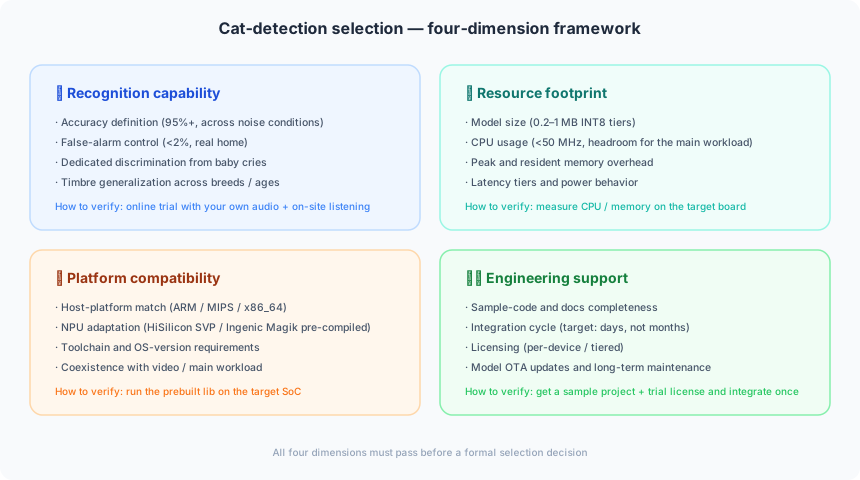
1. Recognition capability — accuracy benchmarks, false-alarm control, dedicated cry discrimination, breed/age generalization. Verify with your own recordings in the live demo.
2. Resource footprint — 0.2–1 MB INT8 models, CPU under 50MHz, memory overhead. Verify with CPU/memory profiling on your target board.
3. Platform fit — ARM/MIPS/x86_64 support, pre-trained NPU binaries (HiSilicon SVP, Ingenic Magik), toolchain requirements. Verify by running the pre-built demo on your SoC.
4. Engineering support — sample code completeness, integration timeline (days, not months), licensing model, OTA model updates. Verify with a real integration round on a trial license.
Integration Path: From Evaluation to Mass Production
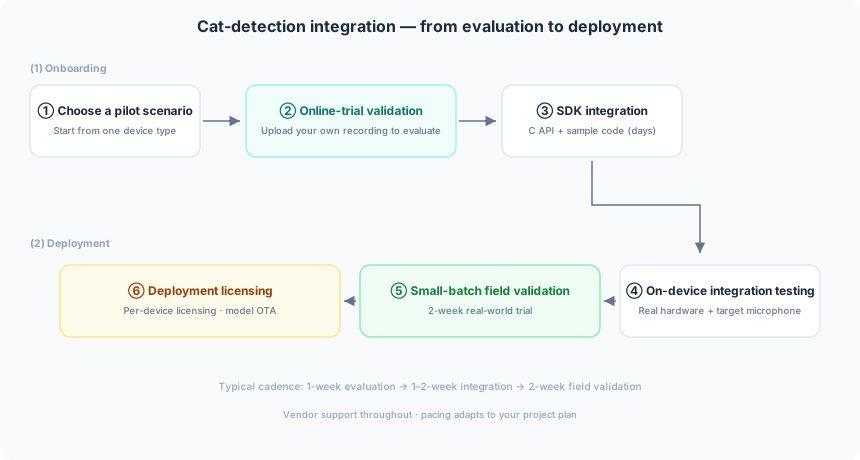
A typical rhythm: pick one pilot device → validate with your own audio in the live demo → integrate the C API (days) → joint debugging on real hardware and target microphone → two-week on-site trial → volume licensing with OTA model updates. Choosing the SDK path keeps your team focused on hardware and product — not on building an ML organization.
Multi-Device Coordination
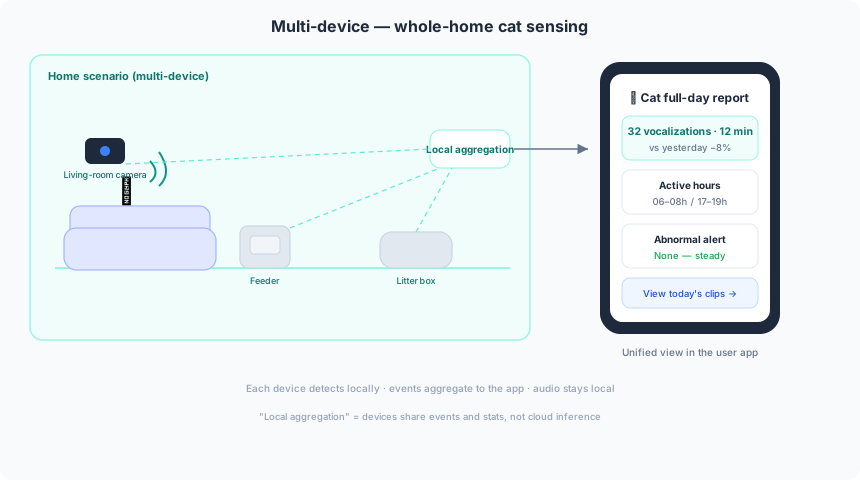
Camera, feeder and litter box each detect locally; events and statistics are shared across devices and surfaced in one daily report in the user app. All inference stays on-device — audio never leaves the devices.
Build vs Buy: The Investment View
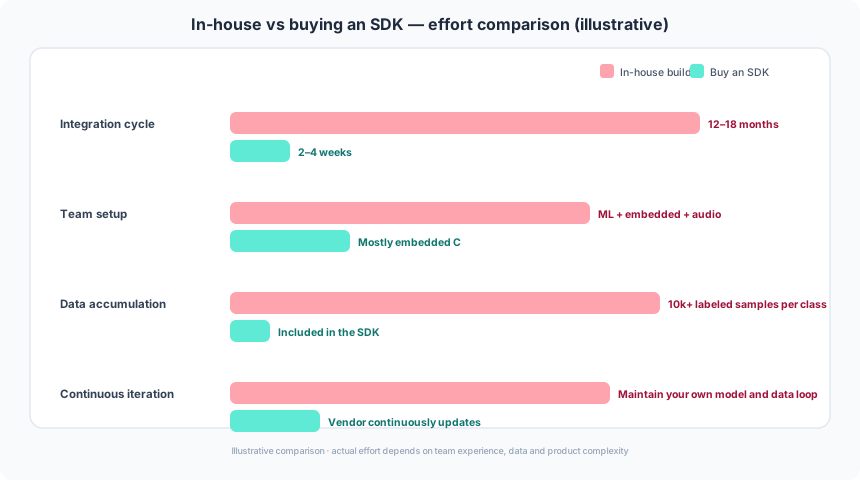
Across integration time, team composition, data accumulation and continuous iteration, the SDK path compresses months into weeks. Building in-house remains the right choice for large teams with dedicated ML organizations and core long-term product lines; the SDK path fits teams that want to ship fast and reuse across product categories.
Platform Compatibility and Performance
Conclusion
Adding cat sound detection is not about buying an algorithm — it is about turning the microphones already in your devices into product differentiation. If you are planning a pet device or a pet-and-baby product line, an online trial with full technical support is available.
Want to try the detection yourself?