Snore Detection Principles: From Sound to Sleep Breathing Events
Snoring: An Underestimated Health Signal
About 45% of adults snore occasionally and 25% are habitual snorers. Snoring is more than noise — it can indicate simple snoring, upper airway resistance syndrome (UARS), or even sleep apnea. For device makers, snore recognition is the step that turns a sleep product from "recording data" into "understanding sleep".
The Acoustic Signature of Snoring
Compared with ordinary environmental noise, snoring has three distinctive traits:
Low-frequency energy — — snoring comes from soft-tissue vibration driven by airflow, so its spectrum concentrates at low frequencies
Periodic occurrence, synchronized with breathing — — the most fundamental difference from other sounds
Hundreds of milliseconds per event — — repeated with each breathing cycle, forming an "event sequence"
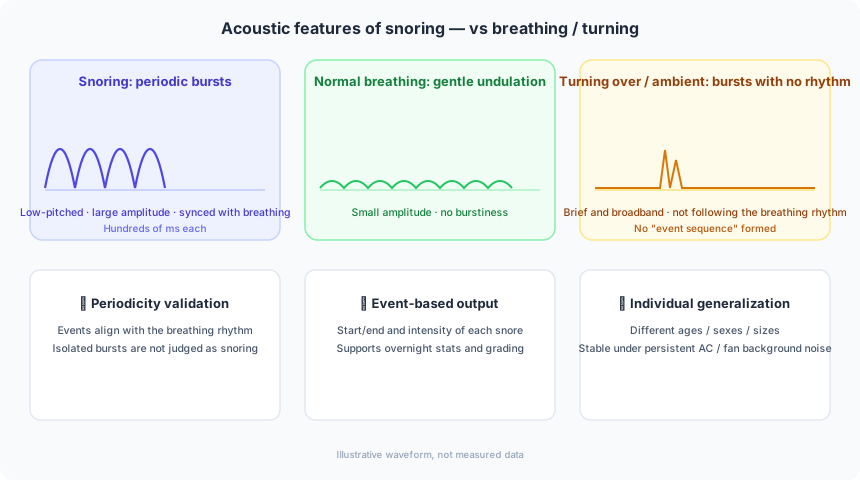
These traits define the detection approach: not "hearing something that sounds like snoring," but recognizing a sequence of events synchronized with breathing.
Event-Based Detection: Three Key Designs
Key 1: Locate events first, then judge. The system first detects energy-burst events, producing onset/offset and intensity for every snore — instead of classifying each frame in isolation. This becomes the foundation for overnight statistics.
Key 2: Periodicity verification. Real snore events arrive in sequences that follow the breathing rhythm; isolated bursts (turning over, coughing, bed-frame noise) form no sequence and are rejected.
Key 3: Generalization across people and environments. Snoring varies widely with age, gender and body type — while air conditioners, fans and rain persist in the background. Detection must stay stable between the two.
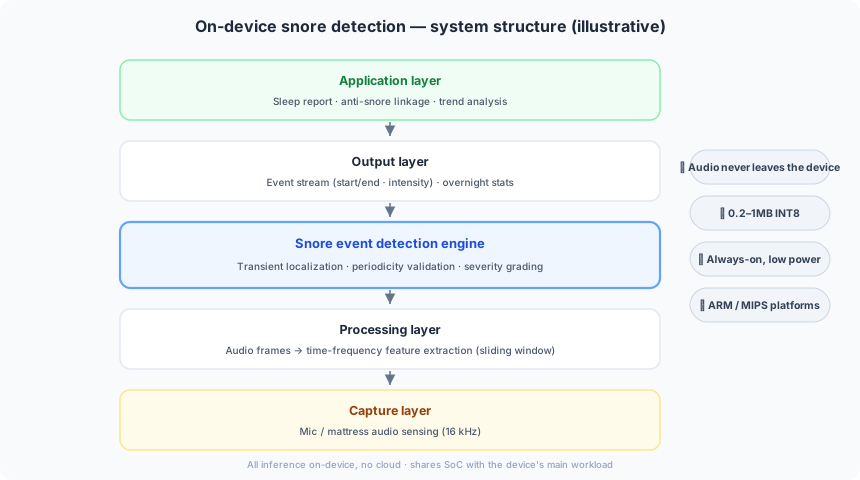
From Detection to Intervention: The Full Workflow
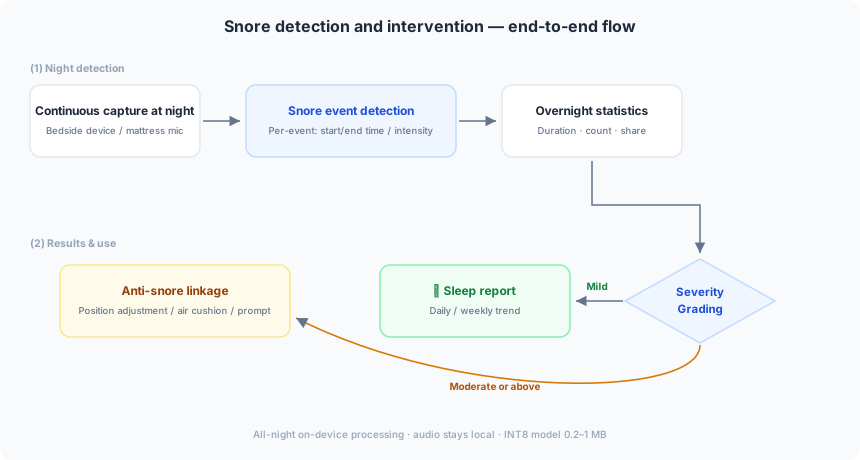
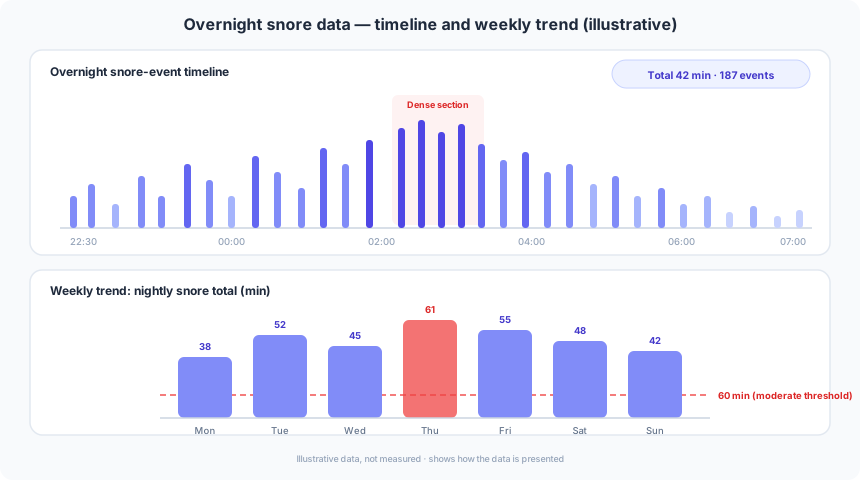
A typical overnight pipeline:
1. Continuous capture — a bedside device or smart mattress microphone listens at low power
2. Snore event detection — outputs onset/offset and intensity per event
3. Overnight statistics — total duration, event count, share of sleep time
4. Severity grading — mild / moderate / severe, enabling differentiated services
5. Results and actions — daily/weekly sleep reports; moderate or above can trigger anti-snore intervention (position adjustment, air cushion, prompts)
The entire chain runs on the device — audio never leaves it. That is both a privacy requirement and the guarantee of offline operation.
Platform Compatibility and Performance
The model runs on the low-power platforms common to sleep monitors, sharing the SoC with the device's main workload.
Typical Applications
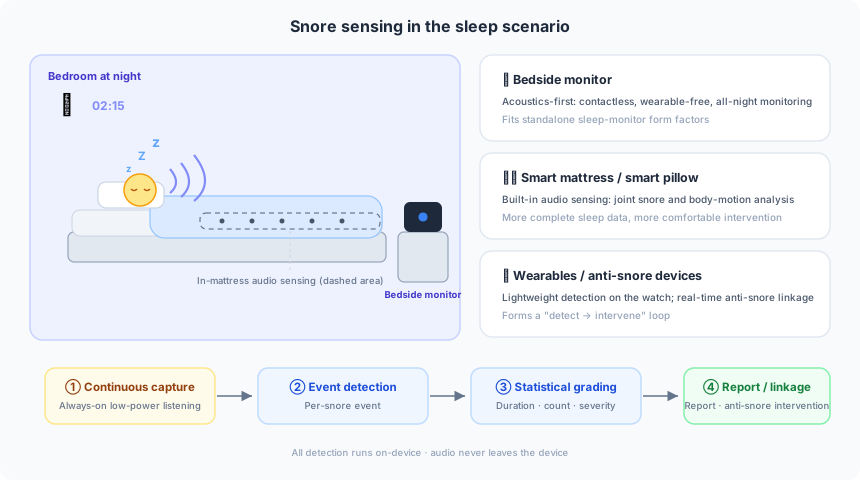
Sleep monitors / smart mattresses — — snore event logging and sleep quality scoring
Health wearables — — overnight snore detection and breathing screening
Anti-snore devices — — real-time detection driving intervention actions
Elderly care — — acoustic-side monitoring of nighttime breathing anomalies
Conclusion
The value of snore recognition is not "detecting a sound" — it is turning a night of breathing events into readable health data and driving real intervention. If you are evaluating snore detection for a sleep product, an online trial with full technical support is available.
Want to try the detection yourself?